Technical Support
SUBSCRIBE TO OUR MAILING LIST!Industry news, technical advice and company announcements, straight to your inbox.

The introduction of Awaab’s Law in late 2025 has rightly sharpened the focus on damp, mould, indoor air quality and External Wall Insulation, particularly within the social housing sector. The legislation places a clear duty on landlords to address hazards arising from excess moisture and mould as a matter of urgency. Resident health is now firmly recognised as central to housing policy and social landlords across the country are acutely aware of their responsibilities in safeguarding wellbeing.
As the sector works out how to tailor the right responses, it is also important to be clear about what causes it and equally important to understand the solutions.
Damp and mould are rarely caused by a single factor. In practice, they are usually the result of poor thermal performance, insufficient heating, inadequate ventilation and weak retrofit design. When addressed holistically, fabric-first upgrades, including External Wall Insulation (EWI), on solid wall properties play a critical role in preventing these issues, not creating them.
Despite negative press, tens of thousands of properties have benefited from correctly installed EWI, delivering lower running costs, improved comfort and better air quality for residents.
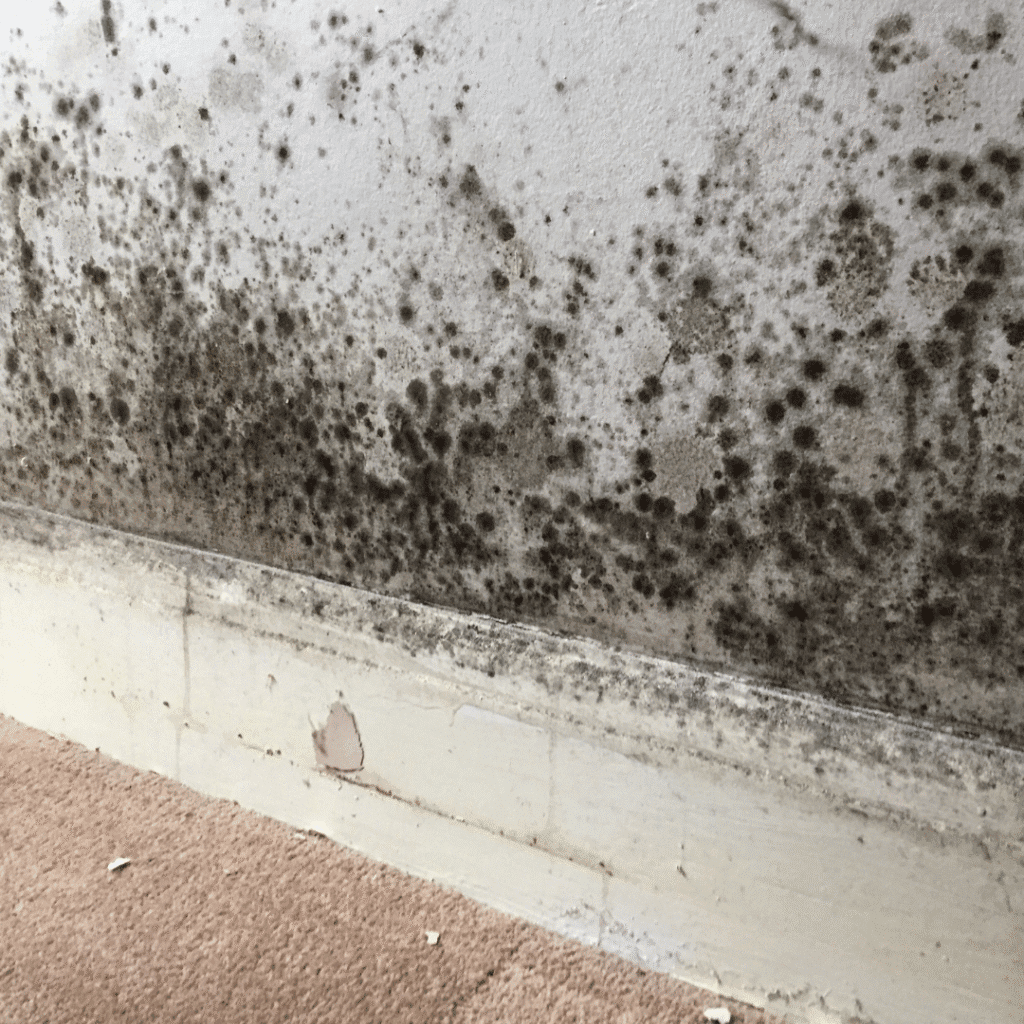
Across the housing stock, mould growth typically arises from one or more of the following conditions:
1. Substandard or uneven heating
Cold internal surfaces, particularly on north-facing elevations (where there is less light and more moisture), struggle to dry out during a heating season. Where rooms are under-heated or intermittently heated, moisture condenses on colder walls, creating the ideal environment for mould growth.
2. Limited ventilation and occupant behaviour
Modern living patterns often reduce natural air changes, as occupiers tend to keep windows closed for security or comfort. Internal moisture from cooking, washing and drying clothes without adequate ventilation or mechanical extract can then build up quickly.
3. Fabric upgrades without a ventilation strategy
Where insulation improves airtightness, whether through external or internal insulation or the replacement of windows, air movement is significantly reduced. Without ventilation being considered at the same time, moisture can become trapped indoors. This is why we always recommend insulation with ventilation.
4. Poorly designed or poorly installed retrofit
The other critical point that sometimes gets missed is the inadequate detailing at various key junctions, such as:
If not properly designed and implemented, systems can allow water penetration or cold bridging, both of which significantly increase the risk of mould.
In the context of Awaab’s Law, External Wall Insulation plays a critical role in addressing the root causes of condensation and mould. This is achieved when it is properly designed, specified and installed as part of a whole-house approach.
Warmer internal wall surfaces
EWI raises surface temperatures across the whole elevation, dramatically reducing condensation risk, which is very useful in treating traditional cold rooms and shaded wall areas. The walls themselves become warm stores of heat.
Consistent, whole-house thermal performance
Unlike partial measures, EWI treats the building envelope as a system, reducing thermal imbalance between rooms and elevations. External Wall Insulation forms a continuous layer on the outside of the building, slowing heat movement through the structure. This allows the building fabric to reach thermal mass more efficiently.
Improved comfort encourages appropriate heating
Warmer homes cost less to heat. This directly tackles under-heating, which is one of the most common drivers of mould formation. It saves the need to purchase additional supplementary heating if the insulation is treated ok.
A platform for integrated ventilation
A professionally designed EWI retrofit considers ventilation from the outset, whether through passive ventilation, mechanical extraction or a more holistically implemented mechanical heating & ventilation solution, ensuring moisture is managed safely.
The risks often attributed to “insulation” are, in reality, design and quality assurance failures. This means that design considerations were ignored and a lack of competent oversight has occurred on the project.
This is why EWI must always be delivered:
At EWI Pro Insulation Systems, we have developed and delivered a whole-house, compliance-led approach, working with independent stakeholders over many years to achieve the best outcomes for consumers. This is achieved by ensuring insulation works in harmony with ventilation, heating and moisture control, rather than against them.
Awaab’s Law is not a challenge to retrofit, but a mandate to do it properly. It refocuses the industry and serves as a clear call to action for all of us to raise standards.
We are confident that well-designed External Wall Insulation reduces the likelihood of damp and mould, improves resident comfort and health, lowers energy bills and supports long-term compliance and asset performance of buildings.
Most importantly, it reinforces a simple truth that poor outcomes are caused by poor design, not by fabric-first measures.
As local authorities and housing providers mobilise under the Warm Homes Plan to deliver this ambitious programme. The plan alludes that EWI delivered to modern standards remains one of the most effective tools available to tackle cold homes, fuel poverty and the conditions that allow mould to thrive.